-
-
- Études de cas
- Actualités et événements
-
Entreprise














Filtralite® Air
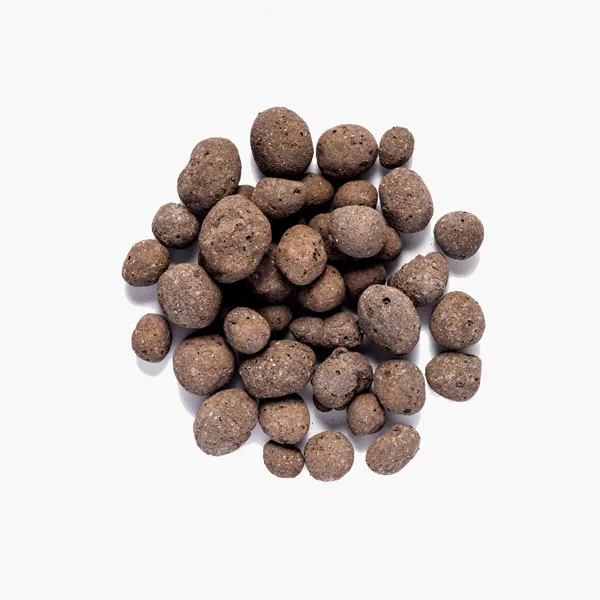
Filtralite® Air 10–20
Filtralite Air 10–20 est un média filtrant de haute qualité, fabriqué à partir d’un matériau unique à base d’argile expansée, et utilisé pour le traitement de l'air et des odeurs.
Filtralite® Air
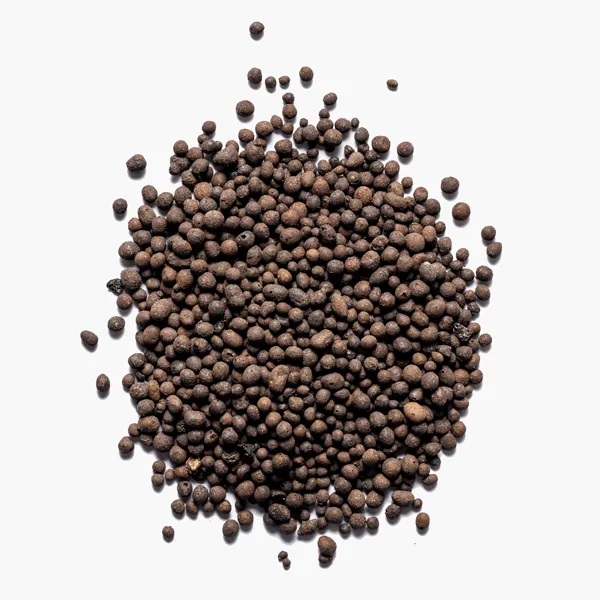
Filtralite® Air 2–4
Filtralite Air 2–4 est un média filtrant de haute qualité, fabriqué à partir d’un matériau unique à base d’argile expansée, et utilisé pour le traitement de l'air et des odeurs.
Filtralite® Air
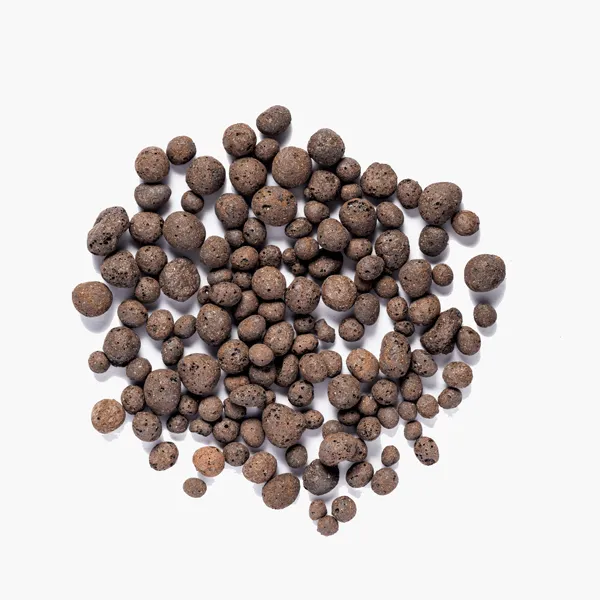
Filtralite® Air 4–10
Filtralite Air 4–10 est un média filtrant de haute qualité, fabriqué à partir d’un matériau unique à base d’argile expansée, et utilisé pour le traitement de l'air et des odeurs.
Informations techniques
Informations techniques complémentaires à propos de nos produits et solutions Filtralite® Air
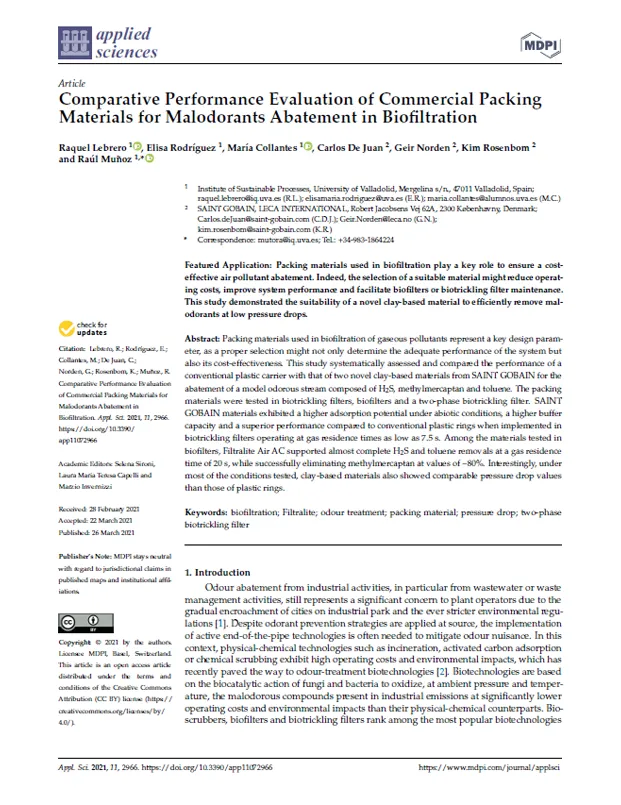
Comparative performance evaluation of commercial packing materials for malodorants abatement in biofiltration
Packing materials used in biofiltration play a key role to ensure a cost-effective air pollutant abatement. Leca expanded clay materials reduce operating costs, improve system performance and facilitate biofilters or biotrickling filter maintenance.
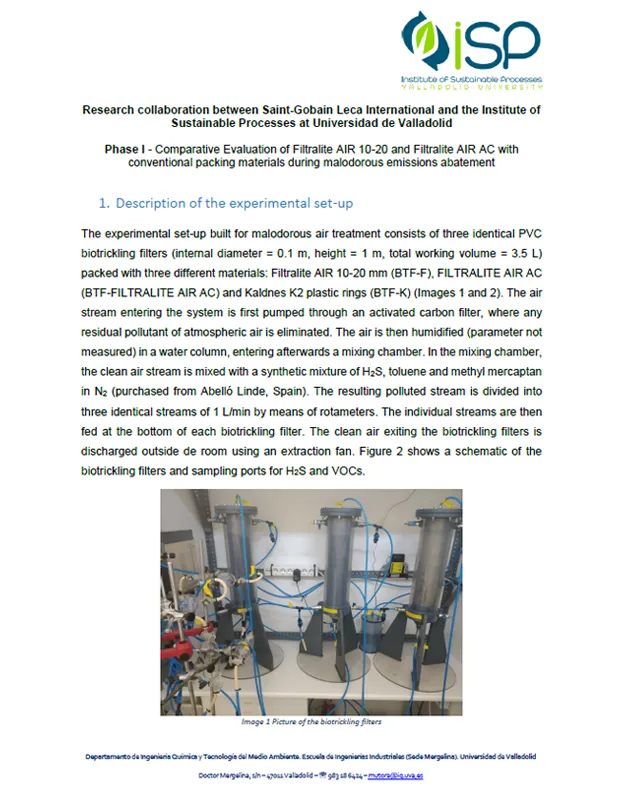
Evaluation of Filtralite Air performance for odour treatment
Used as packing materials in biotrickling filters, Filtralite Air media support higher H2S and toluene removal efficiencies than conventional plastic rings, and significantly better process start-up, with residence times of 7.5 to 15 seconds.
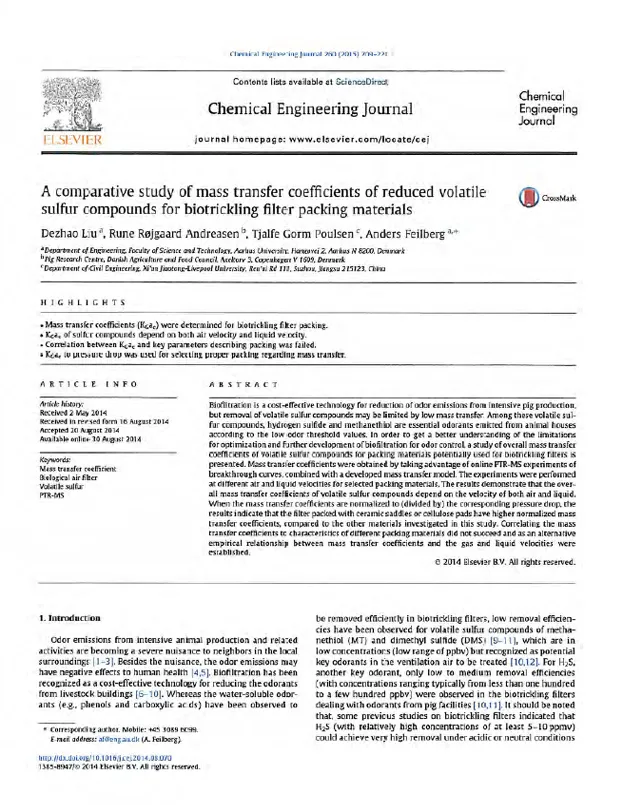
Comparative study of mass transfer coefficients for biofilter packing materials
In order to get a better understanding of the limitations for optimization and further development of biofiltration for odour control, a study of overall mass transfer coefficient of volatile sulfur compounds for packing materials potentially used for biotrickling is presented.
Air flow characteristics in granular biofilter media
The objective of this study was to investigate the relationship between air velocity and pressure drop, material particle size distribution and wetting conditions for Filtralite AIR (Leca LWA). The study shows that increasing particle size average and reduced particle size range together with wetted condition in general are positive for pressure drop.
Air-water mass transfer of sparingly soluble odorous compounds in granular biofilter media
This study investigates the impact of particle size, gas velocity and chemical properties of contaminants on the overall volumetric mass transfer coefficient based on direct measurements of odorous organic compounds in granular media.
Biofilters with Leca reduce odour, ammonia and hydrogen sulphide emissions
In this study, the cleaning efficiency and operational stability of four Filtralite Air based biofilters were examined. Filtralite Air based biofilters reduce the concentration of odour, ammonia and hydrogen sulphide by 78, 96 and 26% respectively. [In Danish]
Chemisorption of hydrogen sulphide and methanethiol by light expanded clay aggregates
Removal of volatile sulphur compounds from livestock waste air by biological air filtration may be enhanced by use of filter materials with reactive properties (autocatalytic removal). In this study, Filtralite AIR was tested with respect to sorption and potential chemical degradation of H2S, methanethiol and dimethyl sulphide.
Experimental determination of mass transfer coefficients of volatile sulfur odorants in biofilter media
In this study, a method based on Proton-Transfer-Reaction Mass Spectrometry has been developed in combination with a developed model to determine the mass transfer coefficient of volatile Sulphur compounds for selected filter materials used in biofilters.
Biofilter media gas pressure loss as related to media particle size and particle shape
This paper investigates the combined impact of filter medium particle size and shape on the air volume – pressure loss relationship. A new model concept for estimating air volume – pressure loss across different particle size distributions and particle shapes are proposed.
Minor losses during air flow into granular porous media
In this study, measurements of pressure gradients inside filter media bed with coarse granular porous media are investigated with respect to an initial pressure loss near inlet and a linear pressure gradient through the filter bed.
Pressure drop in biofilters are related to dust and biomass accumulation
Pressure drop will increase over time due to accumulation of biomass and dust. This study investigates the correlation between initial pressure drop and the development of such during accumulation of biomass and dust.

Brochure
Découvrez les applications, les avantages clés et les caractéristiques techniques de Filtralite Air pour lessystèmes de purification de l’air et des gaz. Conçu pour favoriser le développement des biofilms etl’élimination efficace des odeurs, Filtralite Air contribue à un air pur et à des performances durables.