


















Have questions or want to learn more about how Filtralite® can support your project?

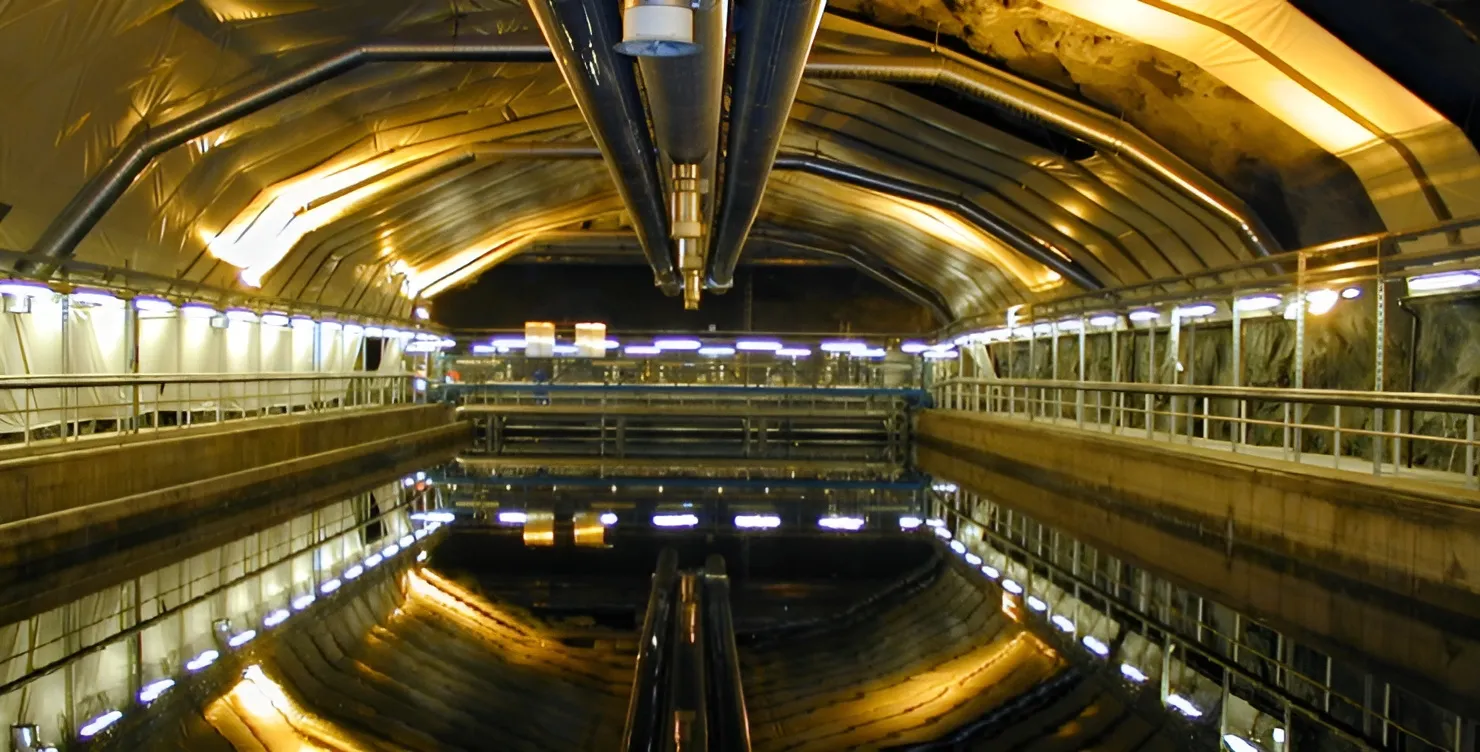
Environmental Standards Drive Bekkelaget WWTP Design
The Bekkelaget wastewater treatment plant in Oslo is designed to treat wastewater from the eastern parts of the city, with a total load of 280,000 PE and a maximum hydraulic load of 260,000 m³/d.
Due to strict local regulations and environmental protection standards, the plant was built to meet demanding discharge limits for phosphorus and nitrogen, including an average discharge limit for phosphorus of 0.2 mg P/L.
The treatment line is based on an activated sludge process with simultaneous precipitation and pre-denitrification. These stages are followed by a tertiary filtration step using dual media composed of Filtralite® MC 2.5–4 and sand. This solution achieves a reduction of about 80% in phosphorus and suspended solids, while significantly limiting coagulant consumption.
Each dual media filter contains 1.8 m of filter material:
There are 16 filters, each with a surface area of 50 m², totalling 800 m². At the bottom, 55 nozzles per square meter with 0.7 mm slits ensure even flow distribution.
The filters treat the entire incoming flow, including both biologically treated and direct-precipitated water. The normal hydraulic load is 5.7 m/h, rising to 14.4 m/h at maximum capacity when 15 filters are in operation (one is always in backwash mode during peak flow).
As a final polishing step, the dual media filters reduce phosphorus and suspended solids by ~80% under normal conditions and ~60% during high-flow events. Coagulant demand remains low, with only 0.5–1.0 g Fe/m³ required during rainy weather and increased flows.

Designed for wastewater treatment plants and treatment of industrial waters, Filtralite Clean is a filter media suitable for both biological treatment and tertiary filtration.