

















Have questions or want to learn more about how Filtralite® can support your project?

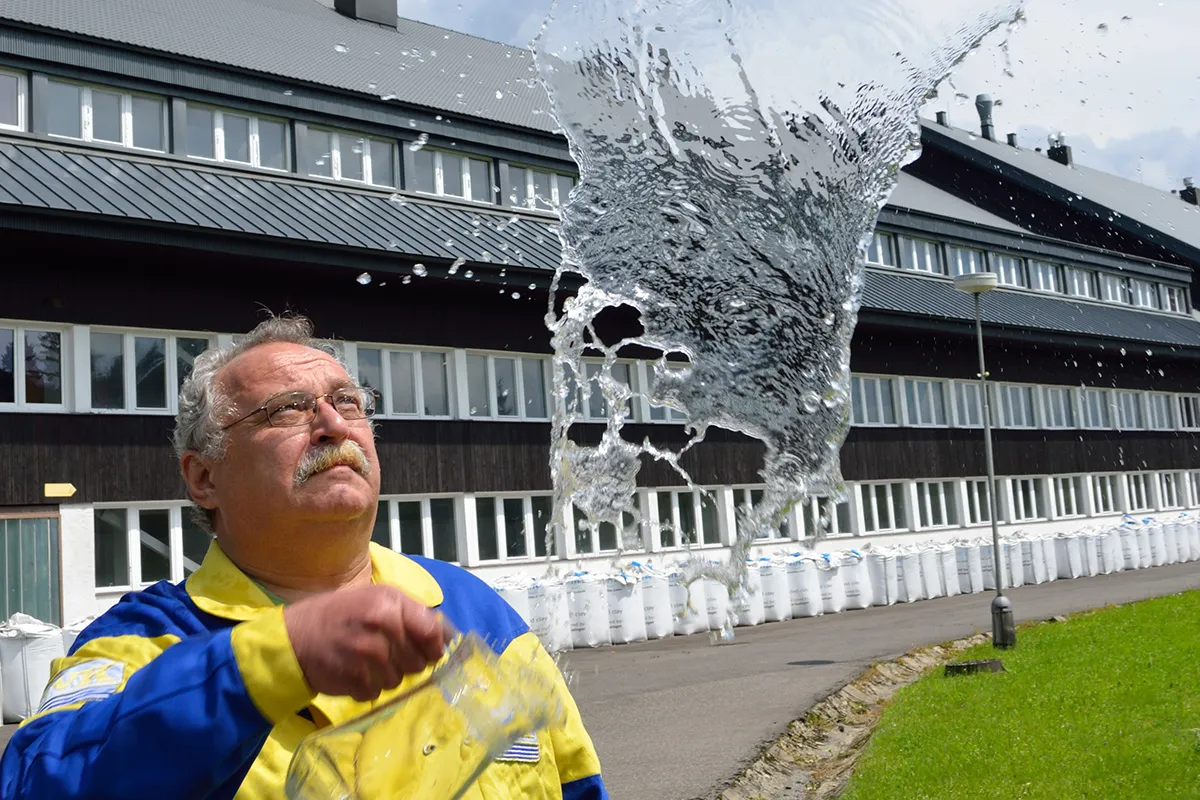
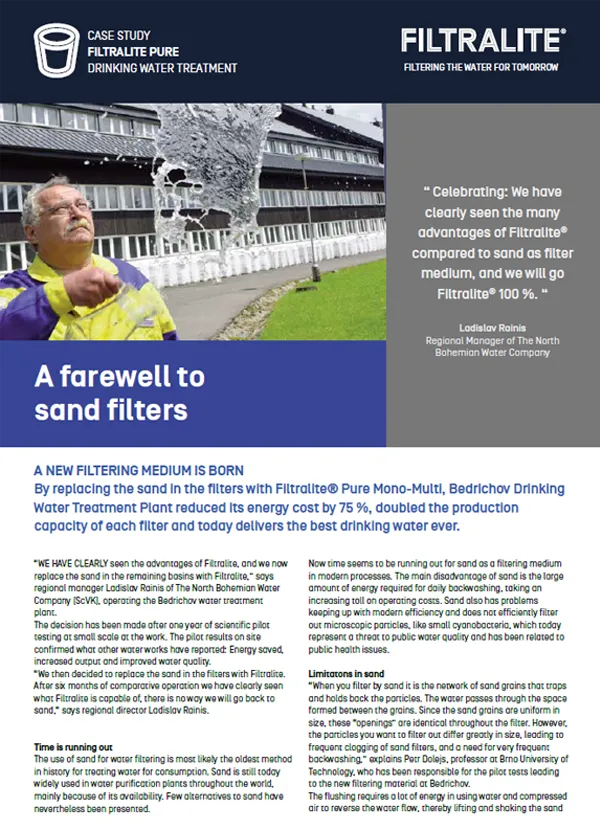
“We have clearly seen the many advantages of Filtralite compared to sand as a filter medium, and we will go with Filtralite 100%.”
Ladislav Rainis, Regional Manager of The North Bohemian Water Company
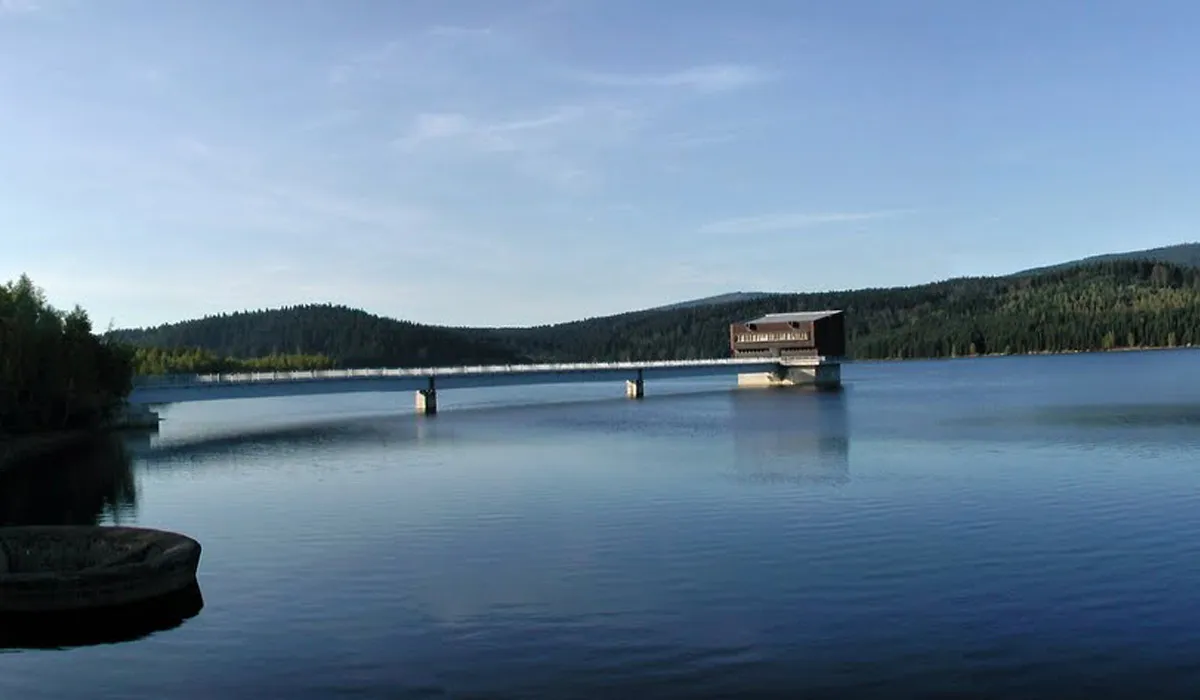
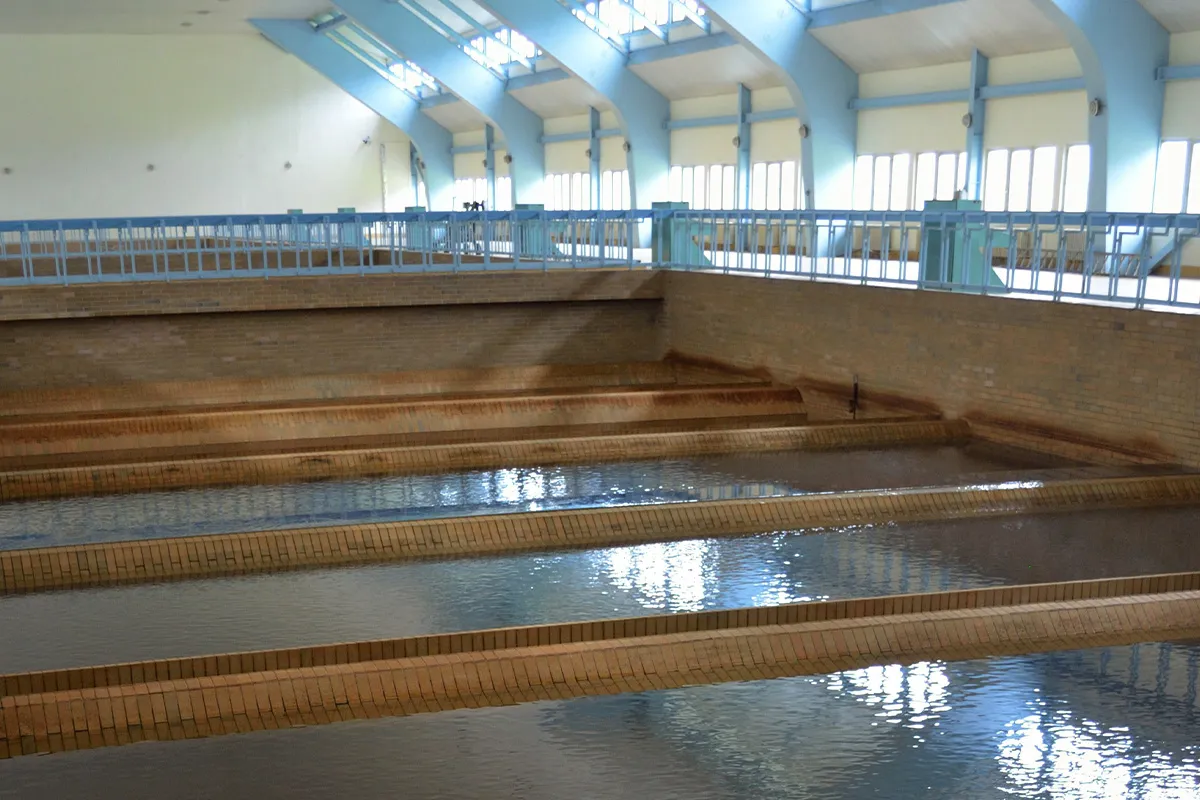
By replacing the sand in its filters with Filtralite® Pure Mono-Multi, the Bedrichov Drinking Water Treatment Plant has reduced its energy costs by 75%, doubled the production capacity of each filter, and now delivers the highest quality drinking water in its history.
Using sand for water filtration is likely the oldest method in the world for producing drinking water. It remains widely used today in water treatment plants around the globe, mainly because of its availability. However, only a few alternatives to sand have been developed — and now, time seems to be running out for sand as a filtration medium in modern processes.
One of the main drawbacks of sand is the large amount of energy required for daily backwashing, which drives up operating costs. Sand filters also struggle to meet modern efficiency demands and are ineffective at removing microscopic particles such as small cyanobacteria, which pose risks to public water quality and health.
“When you filter with sand, the network of sand grains traps and retains particles as water passes through the voids between them. Because the sand grains are uniform in size, these ‘openings’ are identical throughout the filter. However, the particles you want to capture vary greatly in size, leading to frequent clogging and the need for very frequent backwashing,” explains Petr Dolejs, professor at Brno University of Technology, who led the pilot tests that paved the way for the new filtration media at Bedrichov. Backwashing requires significant amounts of energy and large volumes of filtered water.
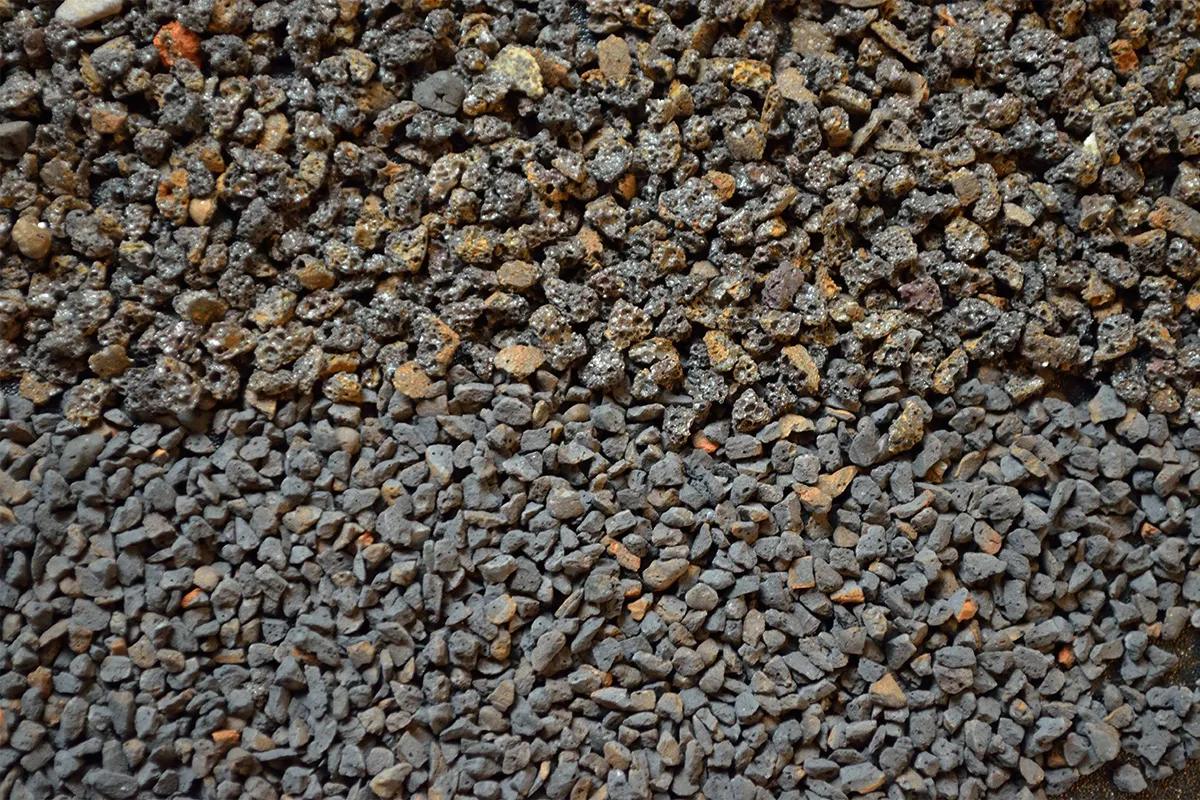
Filtralite® is a modern filtration media made from expanded clay, developed specifically for water treatment. It works according to a slightly different principle than sand. At Bedrichov, Filtralite® Pure Mono-Multi — a two-layer system with particle sizes of 0.8–1.6 mm (HC) and 1.5–2.5 mm (NC) — was installed to replace sand.
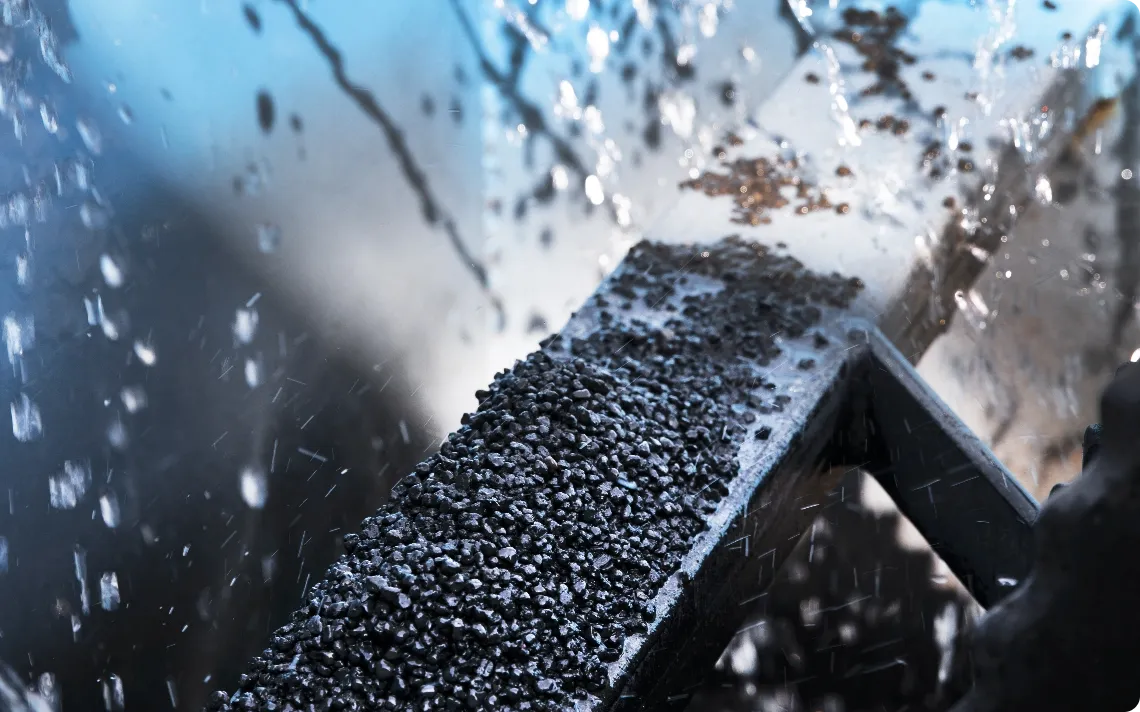
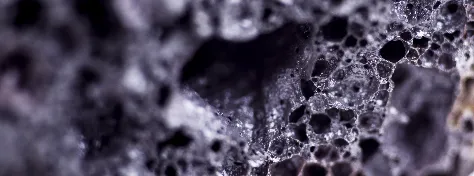
Filtralite® products can be described as small, hard pieces of porous sponge, full of internal pores of various sizes. As water passes through the filter bed, particles are trapped within these pores, while water can also flow directly through the particle itself. This design makes clogging almost impossible.
Thanks to its highly porous structure, Filtralite® offers a much more open filtration medium than sand, with significantly greater capacity for particle retention and improved filtration performance.

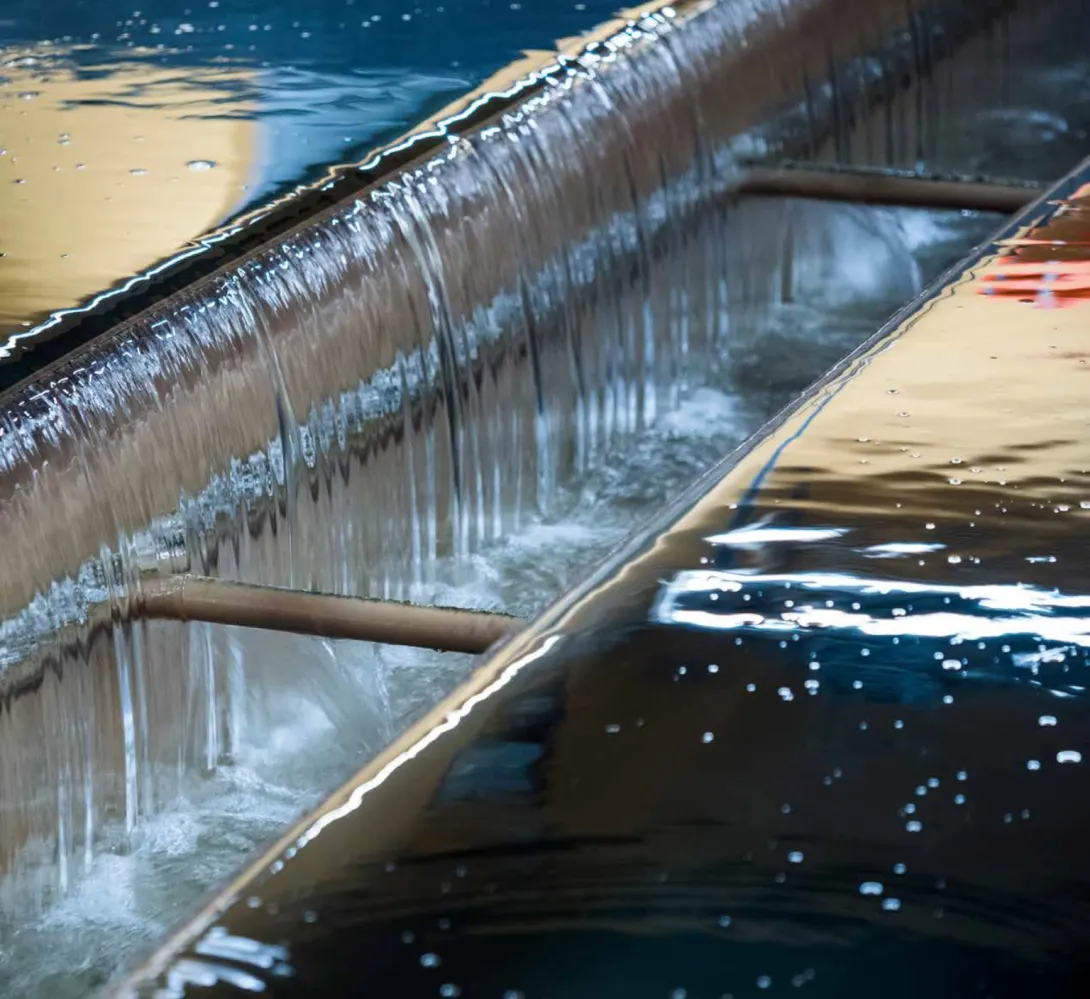
Designed for drinking water plants and pre-treatment for desalination, Filtralite Pure is a filter media suitable for both physical filtration and biological treatment