












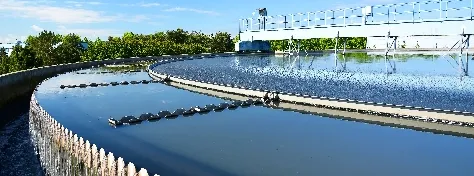



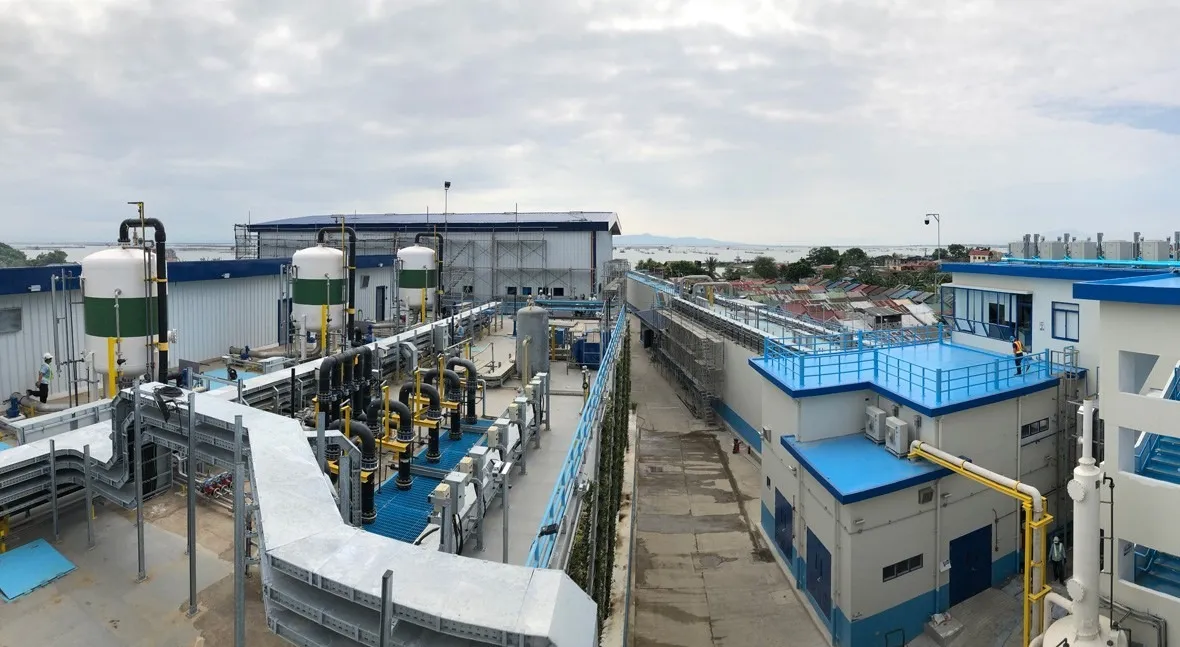
The new drinking water treatment plant, Putatan II, located in the Manila metropolitan area, Philippines, has a capacity of 150,000 m³/day, serving a population of around one million people.
In 2016, Maynilad Water Services Inc. (MWSI) — the water service provider for western Metro Manila — awarded the final design and construction of Putatan II to a consortium formed by ACCIONA and local companies Jardine Energy Control Philippines (JECP) and Frey-Fil Corporation.
One of the main design challenges for this plant was providing advanced treatment for raw water sourced from Laguna de Bay, a lake subject to significant demographic pressure. The water is slightly brackish, with a conductivity above 1,000 µS/cm, and the main challenge in rendering it suitable for drinking water is its high ammonia content — with peaks reaching 7 mg/L — and high levels of organic matter. In addition to these treatment challenges, the plant was built on a limited site area, and water production needed to achieve a very low carbon footprint.
Advanced Treatment Processes for Complex Raw Water
The plant’s treatment line includes a series of advanced processes to ensure effluent quality: screening, pre-coagulation and flocculation, dissolved air flotation (DAF), post-coagulation, aerated biofiltration with Filtralite®, ultrafiltration, reverse osmosis, as well as final disinfection and intermediate oxidation.
A key element of the treatment process is the inclusion of Aerated Biofilters (BAF). These biofilters eliminate ammonia and biodegradable organic matter while also removing suspended solids. Biofiltration was part of the original MWSI project plan, backed by successful experience from the Putatan I drinking water treatment plant, which has used this technology for years. Results from BAF biofilters at the existing plant demonstrated that they are an effective and low-operating-cost solution. Consequently, biofiltration became a design priority for the Putatan II expansion.
Biofiltration: A Cost-Effective Alternative to Chlorination
Biological nitrification is a well-established process in wastewater treatment, but its application in drinking water treatment represents a significant improvement over traditional ammonia removal by breakpoint chlorination. The main drawback of breakpoint chlorination is the high chlorine demand — about 10 parts chlorine per part of ammonium. For example, at Putatan II, with 120,000 m³/day and minimum N-NH₄ values of 1.3 mg/L, around 15 tonnes/day of chlorine would be required. At peak levels of 7 mg/L N-NH₄, observed seasonally, the chlorine demand would be prohibitively high.
From a financial standpoint, the OPEX cost associated with chlorine makes biofiltration a far more attractive solution, particularly considering the low operating cost per cubic meter of biofiltration. Chlorination also involves additional complexity related to chemical purchase, transport, handling, and storage. Furthermore, heavy chlorination of raw water with high organic content can result in the formation of undesirable disinfection by-products.
Optimised Biofilter Design with Filtralite®
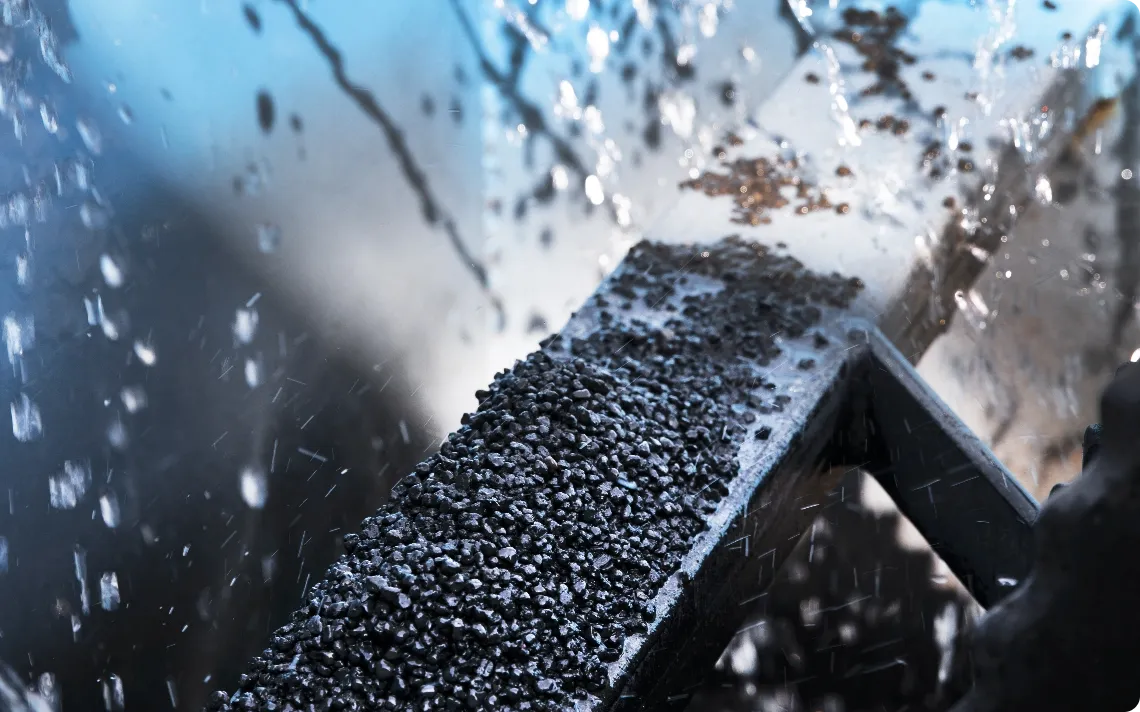
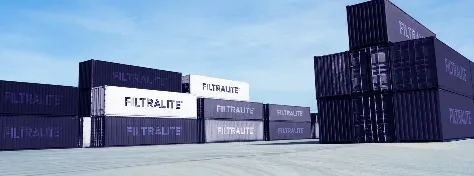
ACCIONA developed a biofiltration design using its Biofilpas® aerated filter technology. The biofilter is filled with expanded clay with the technical specifications of Filtralite® HR 3–6. Thanks to its high specific surface area, durability, and excellent hydraulic performance, Filtralite® is the ideal filter media for biofiltration. Its physical properties — including pH characteristics and high porosity — promote rapid biofilm formation, strong adhesion, and stable performance even after backwashing.
The Putatan II design includes 14 aerated biofilters with a down-up flow configuration (12 + 2 standby units). The system is designed for a hydraulic loading rate of 10.5 m/h, with a maximum of 12 m/h when one filter is being backwashed. Biofiltration operates at higher velocities than typical sand filtration, enabling significant space savings and addressing site constraints.
Filtralite® Achieves Low OPEX and High Treatment Standards
In terms of process performance, BAF biofilters with Filtralite® handle input water with the following pollution loads: BOD: 6–10 mg/L, N-NH₄: 1.3–7 mg/L, and TSS: ~100 mg/L. Effluent quality targets include: BOD < 2 mg/L, N-NH₄ < 0.1 mg/L when inlet concentrations are below 2 mg/L (or up to 90% removal when above 2 mg/L), and TSS < 5 mg/L.
Since commissioning, the biofilters have consistently achieved optimal performance, particularly in the removal of ammonia, which is one of the most challenging pollutants to treat.
Filtralite®-based biofiltration offers high operational performance and low operating costs compared to conventional methods. The shift from chemical to biological treatment for ammonia removal is now a proven and practical solution for drinking water treatment plants.
Putatan II is the second drinking water treatment plant in Asia to use Filtralite® for ammonia removal — following the Tai Po plant in Hong Kong — and demonstrates the growing importance of this technology as a sustainable solution for future water treatment needs.
We acknowledge ACCIONA's collaboration in drafting this article.