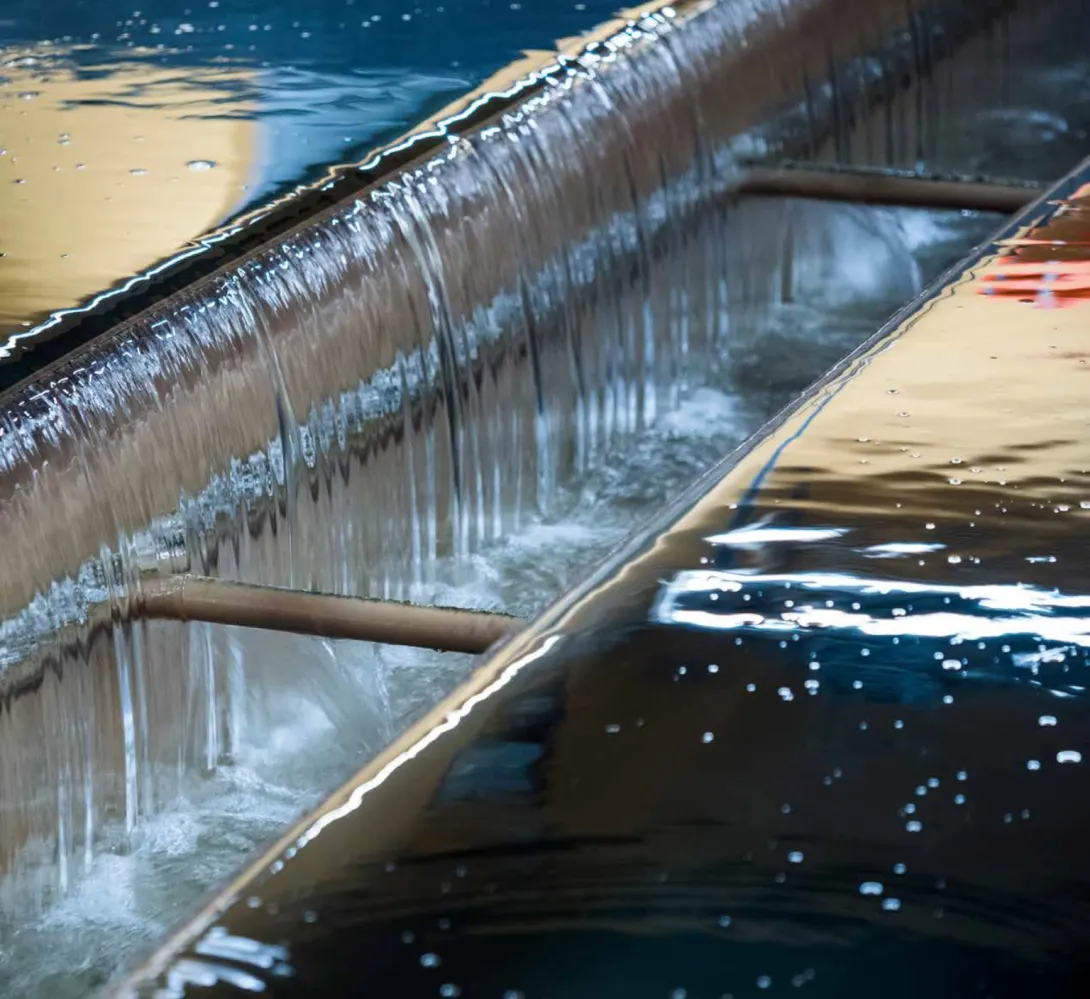



















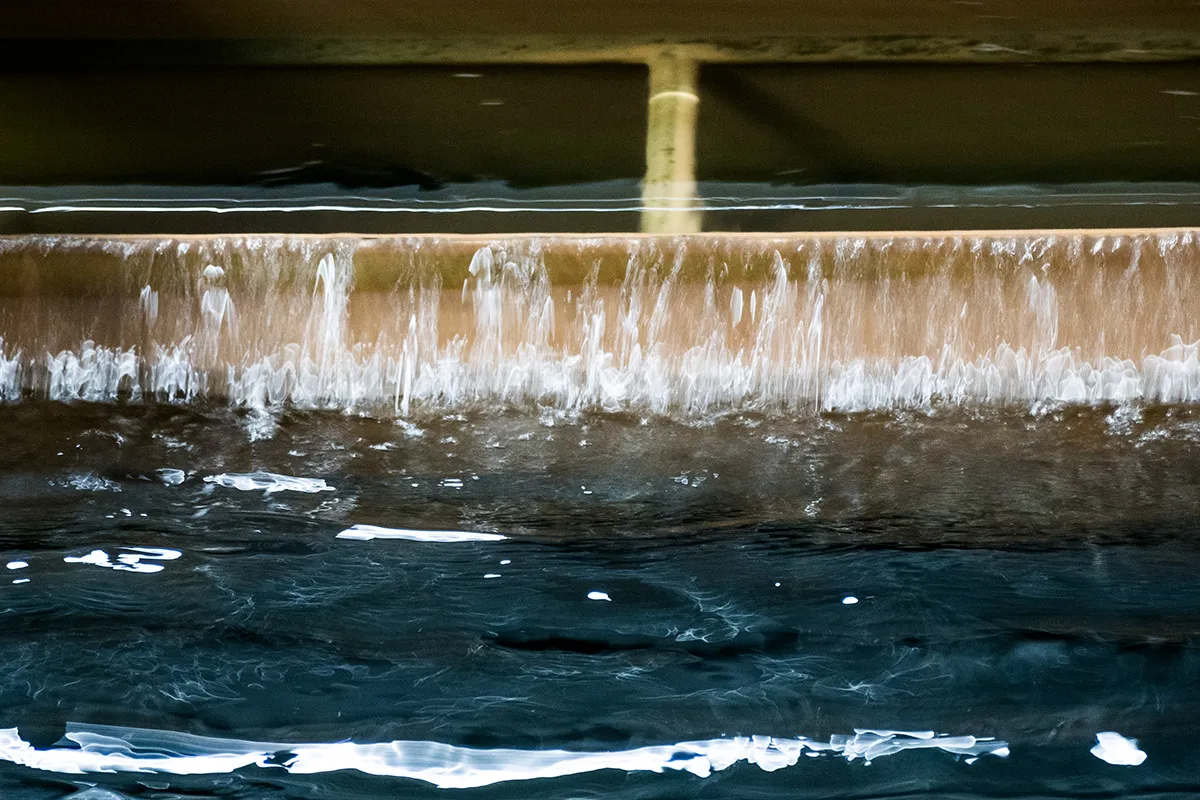
The waterworks in Olofström, Sweden, were built between 1969 and 1970 and today supply drinking water to 10,000 inhabitants in the municipality. The plant produces just over 3,000 m³ per day, which corresponds to an annual output of approximately 120,000 m³.
The raw water comes from several sources, including both groundwater and surface water. Some of the groundwater contains elevated levels of manganese, which can cause deposits in pipes and lead to discolouration of dishes and laundry.
Biofiltration for Manganese Removal
In 2015, a biofilter was installed to reduce the manganese content in the water. In a biofilter, microorganisms enable oxidation and convert dissolved manganese into various oxides, primarily manganese dioxide (MnO₂). The manganese then precipitates into solid form and is removed during filter backwashing.
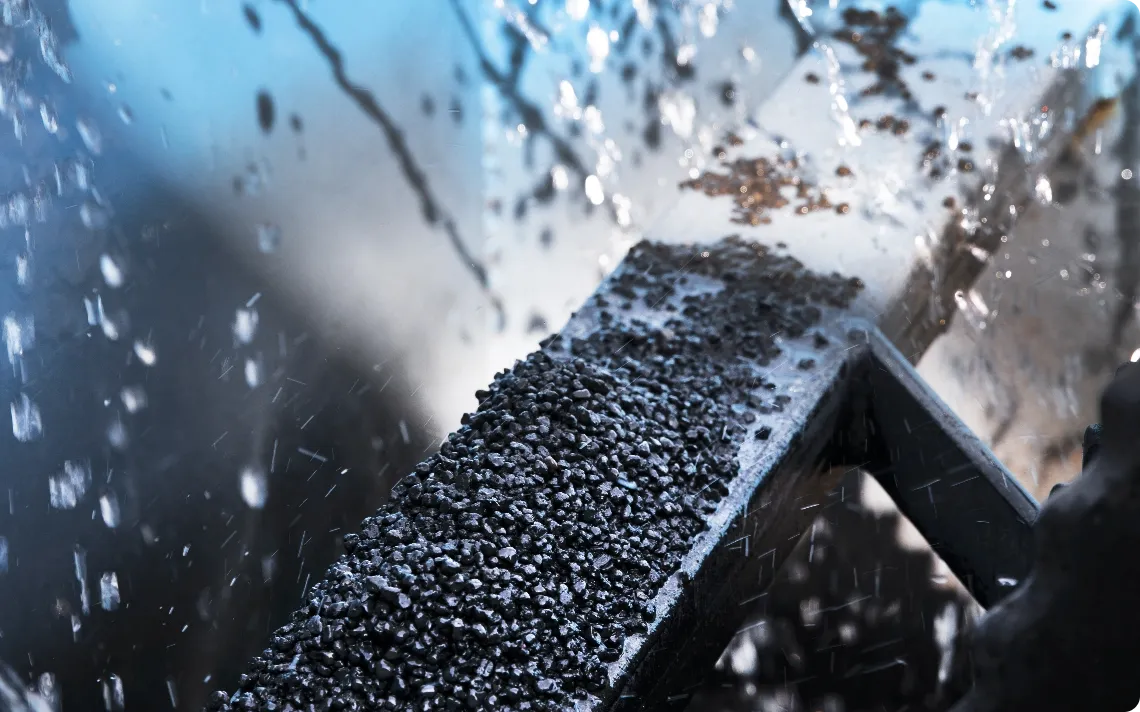
To install this biofilter, an existing sand filter was modified and converted for biological treatment. Among other adjustments, the sand was replaced with Filtralite® Pure NC 1.5–2.5, an effective carrier material for microorganisms. Filtralite products have a high specific surface area and internal pore structure, enabling high biological activity per unit volume.
Creating Optimal Conditions for Biofiltration
The filter surface is 25 m² with a filter depth of 1 meter. The filtration rate is approximately 2 m/h, resulting in a daily production capacity of more than 1,000 m³ through the filter.
To create optimal conditions for the microorganisms, the pH must be raised from about 6 to 8. At higher pH levels, oxidation to manganese dioxide is more efficient, increasing the overall performance of the filter. The pH increase is achieved by removing dissolved carbonic acid using a gas stripper.
Backwashing is required only two to three times per year.
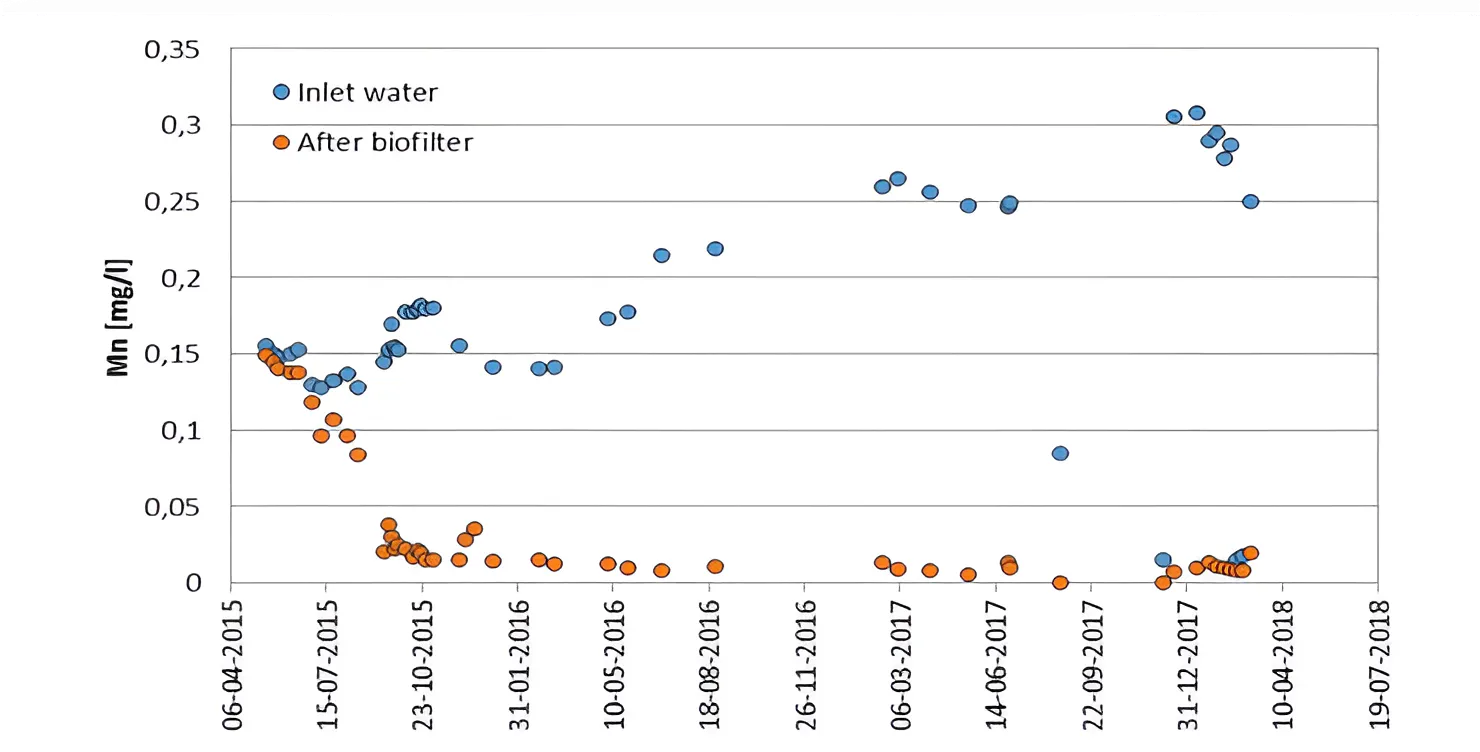
During start-up in 2015, it took about four months for the bacterial flora to establish and operate optimally. No seeding was necessary — the biofilter was activated solely by naturally occurring bacteria present in the raw water.
High Manganese Removal Efficiency
Monitoring results show how the biological process developed and the level of manganese removal achieved. The inlet water contains manganese levels of up to 0.3 mg/L, while the outlet water (after the biofilter) typically contains around 0.01 mg/L. The removal rate is usually over 90%.